Steam, Steel, and Seven Years of Sun: Inside the Autoclave
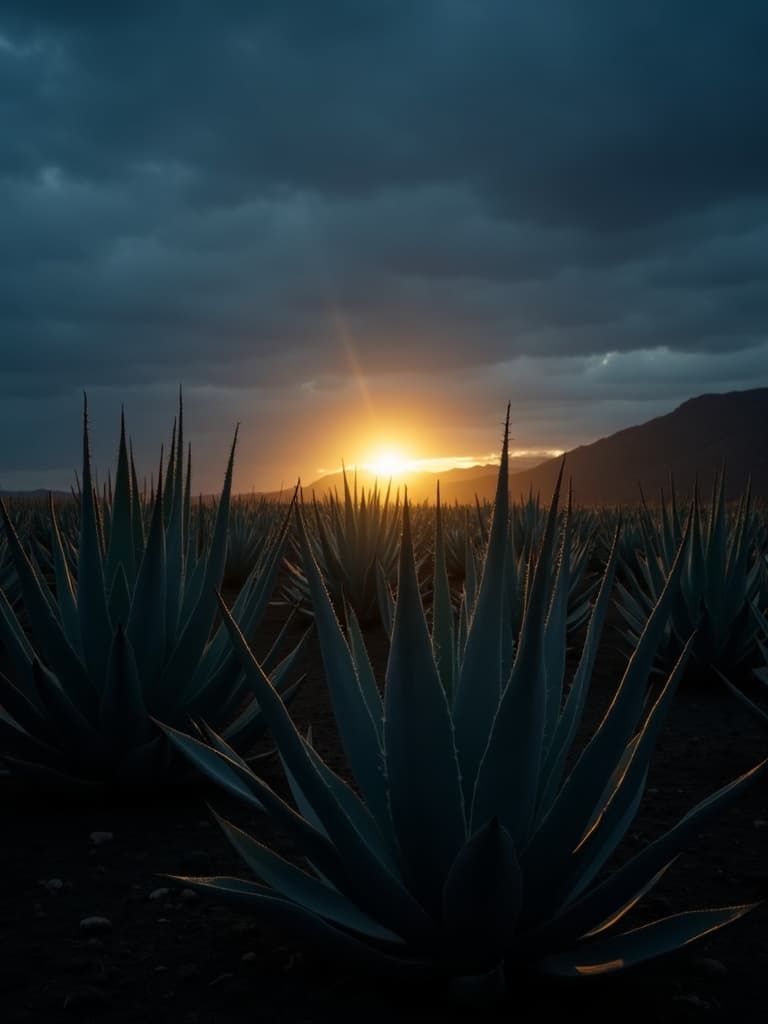
Every tequila begins with the same decision: how do you turn seven years of stored sunlight into sugar? The piña, the great heart of the blue Weber agave, arrives at the distillery dense with starch. Cooking is what convinces it to become honey.
What is an autoclave in tequila production?
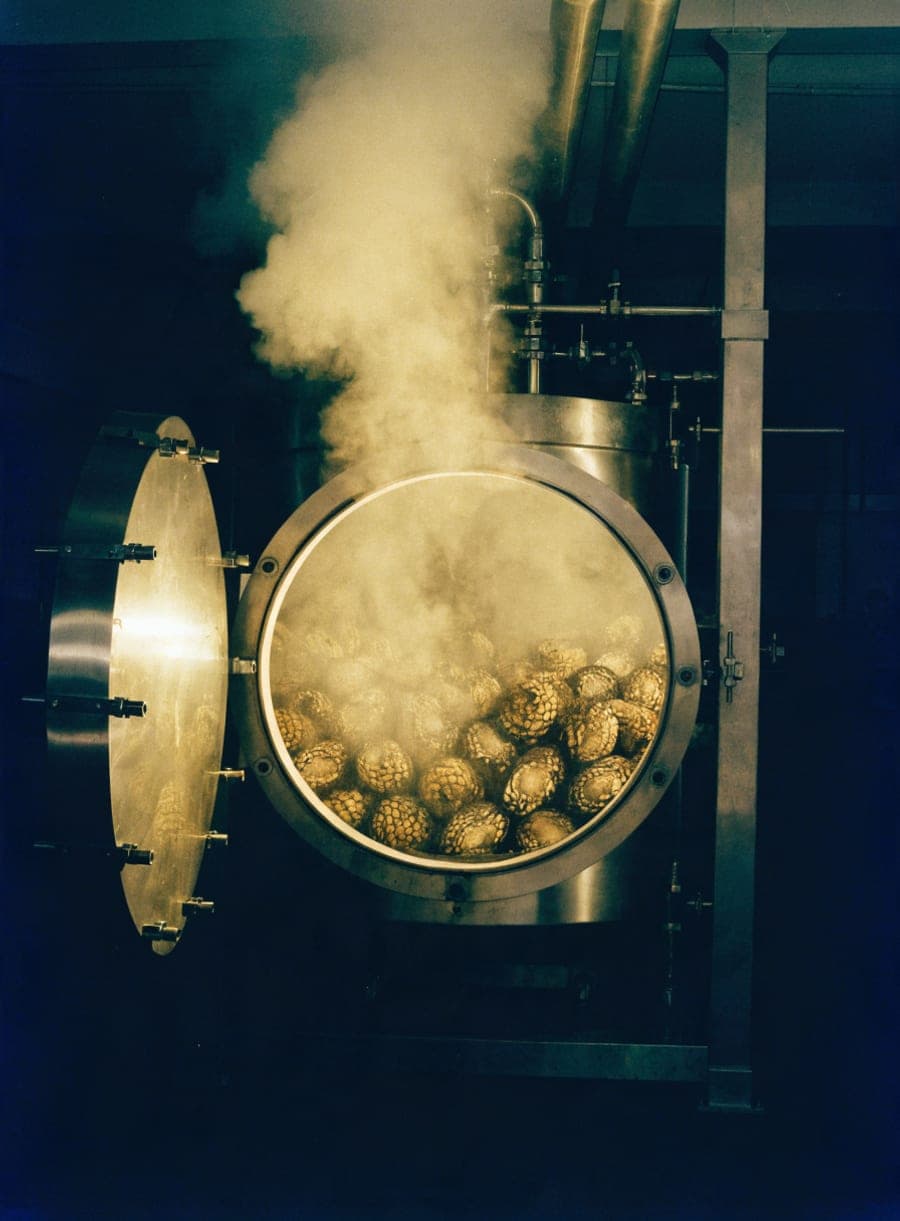
An autoclave is a stainless steel pressure vessel used to cook agave piñas with steam before fermentation. The heat and pressure convert the agave's stored starches into fermentable sugars, which yeast later turns into alcohol.
How does an autoclave cook agave?
An autoclave cooks agave by sealing halved piñas inside a steel chamber and introducing steam under pressure, so heat reaches every fiber at the same temperature. The cook softens the agave and turns its starch into sugar, leaving the piñas dark, soft, and honey sweet.
At Mar Azul, the piñas are halved and loaded into the autoclave, a great steel pressure oven sealed behind a round door heavy as a ship's hatch. Steam does the work, low and slow, reaching every fiber evenly until the starch surrenders into a dark, honeyed sweetness. When the door swings open, the whole room smells of cooked agave.
The autoclave doesn't rush the agave. It just holds it at the exact temperature where patience becomes sugar.
Why does blue Weber agave take years to grow?
Blue Weber agave is a slow-maturing plant that generally spends several years in the field, commonly six to eight, before its piña holds enough stored starch to be worth harvesting. Those years of sunlight are the raw material a distillery later converts into fermentable sugar.
What is the difference between an autoclave, a brick oven, and a diffuser?
Tequila producers prepare agave sugars in three main ways. A traditional brick oven (horno) cooks whole or halved piñas slowly with steam over many hours; a stainless steel autoclave cooks them with steam under pressure, more quickly and more evenly; and a diffuser uses hot water, often with acid, to strip sugars from shredded and largely uncooked agave.
- ·Brick oven (horno): slow steam cooking in masonry, the oldest of the three methods.
- ·Autoclave: steam under pressure in stainless steel, faster and notably even.
- ·Diffuser: hot water extraction from shredded agave, with little or no cooking beforehand.
Does the cooking method change how tequila tastes?
The way agave is cooked does change how the finished tequila tastes, because cooking determines how evenly the starch becomes sugar and how much caramelization develops. Evenly cooked agave ferments cleanly and yields a rounder, fruit-forward tequila, while scorched or unevenly cooked fibers can leave bitter, burnt notes in the glass.
How does Mar Azul cook its agave?
Mar Azul cooks 100% blue Weber agave from the Jalisco highlands in an autoclave, a sealed steel pressure oven that steams the halved piñas at an even temperature. That even cook is what gives the Silver its fruit-forward sweetness and gives the Reposado and Añejo a clean base for the barrel to build on.
Even cooking means clean fermentation: no scorched fibers, no bitter edges, just the fruit-forward sweetness you taste in our Silver and the caramel depth the barrel builds on in our Reposado and Añejo. Next time you sip, look for it: that roundness at the center is the autoclave's signature.
Common questions
- What is a piña?
- A piña is the heart of the agave plant, what remains once the long leaves are cut away at harvest. It resembles an oversized pineapple, which is where the name comes from, and it holds the starches that cooking converts into fermentable sugar.
- Is tequila cooked in an autoclave still 100% agave?
- Yes. The 100% agave designation depends on all fermentable sugars coming from agave, not on which oven cooked it, so an autoclave-cooked tequila can absolutely be 100% agave. A mixto, by contrast, may draw as little as 51 percent of its sugars from agave.
- Does cooking agave in an autoclave make tequila smoky?
- No. Smoke is the signature of mezcal, whose agave is roasted in earthen pits over wood and hot stone. Tequila agave is cooked with steam, in either a brick oven or an autoclave, so it takes on sweetness and caramel rather than smoke.
- Where is tequila allowed to be produced?
- Tequila may only be made in the Mexican state of Jalisco and in specified municipalities of Guanajuato, Michoacán, Nayarit, and Tamaulipas, and only from blue Weber agave. The Consejo Regulador del Tequila (CRT) verifies that producers meet the official standard.
- How can you find out how a tequila's agave was cooked?
- Labels rarely state the cooking method, so the practical route is the producer's own materials: a brand or distillery page usually names its ovens. Producers who cook in brick ovens or autoclaves tend to say so plainly, while sugar extracted by diffuser is seldom advertised.